
Capability and Technology
Assets purchased under the iLAuNCH Trailblazer are for use by the Australian space, aerospace and defence industries to support a world-class Australian sovereign manufacturing capability. By building world-class sovereign manufacturing, iLAuNCH is creating new jobs, alongside a highly trained workforce, that will lead to global exports within the space industry and other markets.
iLAuNCH enables the University of Southern Queensland (UniSQ), The Australian National University (ANU) and the University of South Australia (UniSA) to consolidate and coordinate their space manufacturing research and commercialisation activities and partners with Australia’s national science agency, CSIRO, to access specialist equipment and expertise to support the delivery of their projects.
If you are interested in how this equipment can assist your business, please see the Industry Contact information below.
Additive Manufacturing
Advanced Manufacturing Facility with six GE Arcam EBM (Electron Beam Melting) series 3D printers
- Location: Adelaide
- Partners: Future Industries Institute at UniSA and VPG Innovation
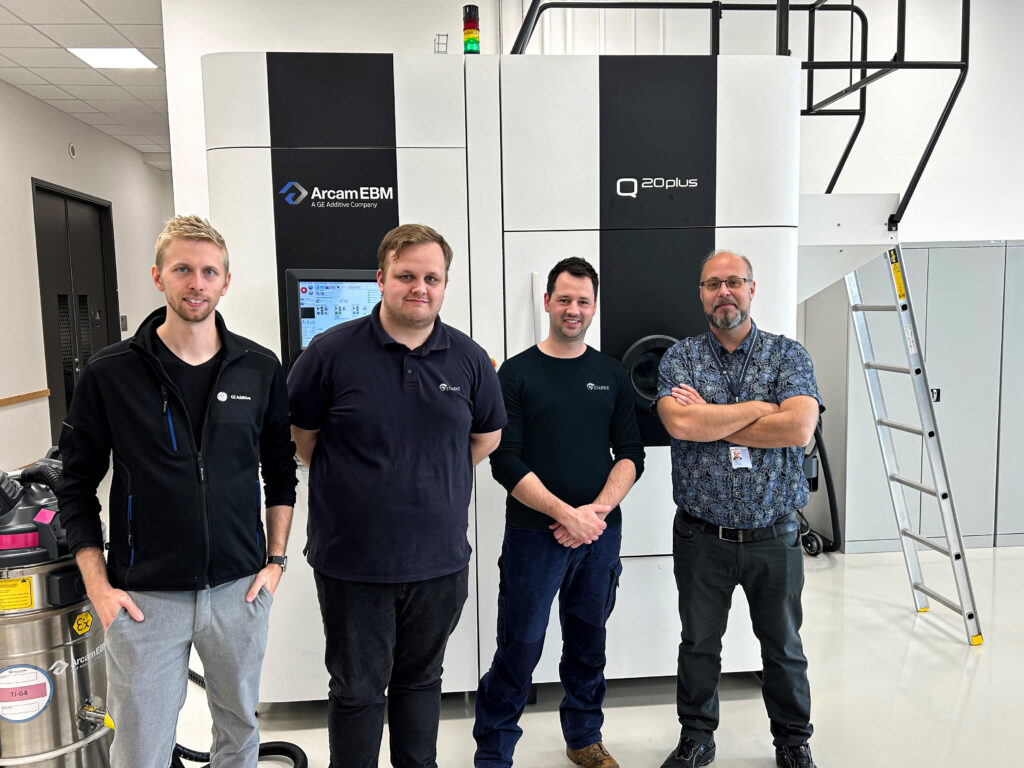
Use: Additive manufacture of lightweight components with a very efficient buy-to-fly ratio. EBM also allows you to additively manufacture parts using crack-prone materials.
Adelaide-based advanced manufacturer VPG Innovation is working with UniSA to build a facility that will support the industry with rapid 3D printing of metals for space structures. These machines are capable of printing Titanium and Nickel alloys that are crucial in space technologies.
Six GE Arcam EBM (Electron Beam Melting) series 3D printers will be installed. Utilising a high-power electron beam that generates the energy needed for high melting capacity and high productivity, the hot process allows manufacturers to produce parts with no residual stress and the vacuum ensures a clean and controlled environment.
Nikon SLM-280 2MA multi metal 3D printer
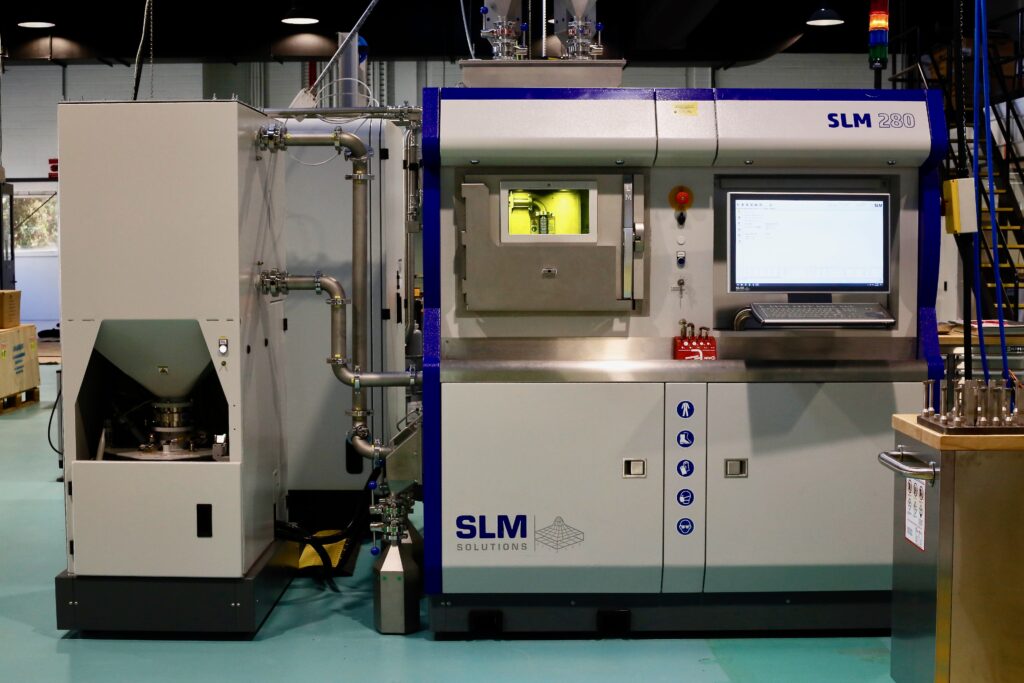
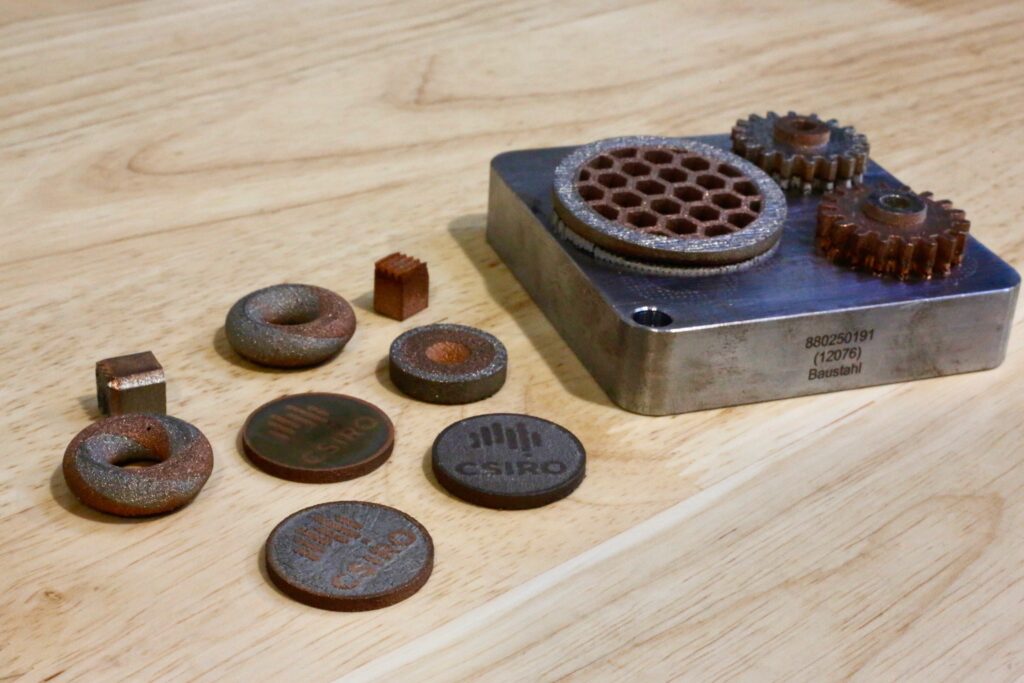
Use: Manufacture of satellite and rocket structures and componentry with optimised designs and improved performance. Developing novel radiation shielding materials and structures with alloys and composites for hypersonic vehicles.
The Nikon SLM-280 2MA (Selective Powder Bed Fusion) at CSIRO’s Lab22 facility will print parts with two metals side-by-side in one continuous print. The technology is extremely well suited to aerospace and space where high performance and lightweight materials are the fundamental drivers of the designs, giving engineers the design freedom to consolidate parts to reduce mass and cost, ultimately making strategic weight decisions where needed.
This capability is the first of its kind as a production machine in Australia, in fact the southern hemisphere, and iLAuNCH is pleased to open up new manufacturing possibilities for locally made products.
Australian researchers and industry are invited to access this technology for ultra-high performance applications at CSIRO’s Lab22 Innovation Centre, one of Australia’s leading centres for metallic additive manufacturing, located at CSIRO in Clayton Victoria.
Filament winding facility
- Location: Toowoomba
- Partners: Centre for Future Materials (CFM) at UniSQ
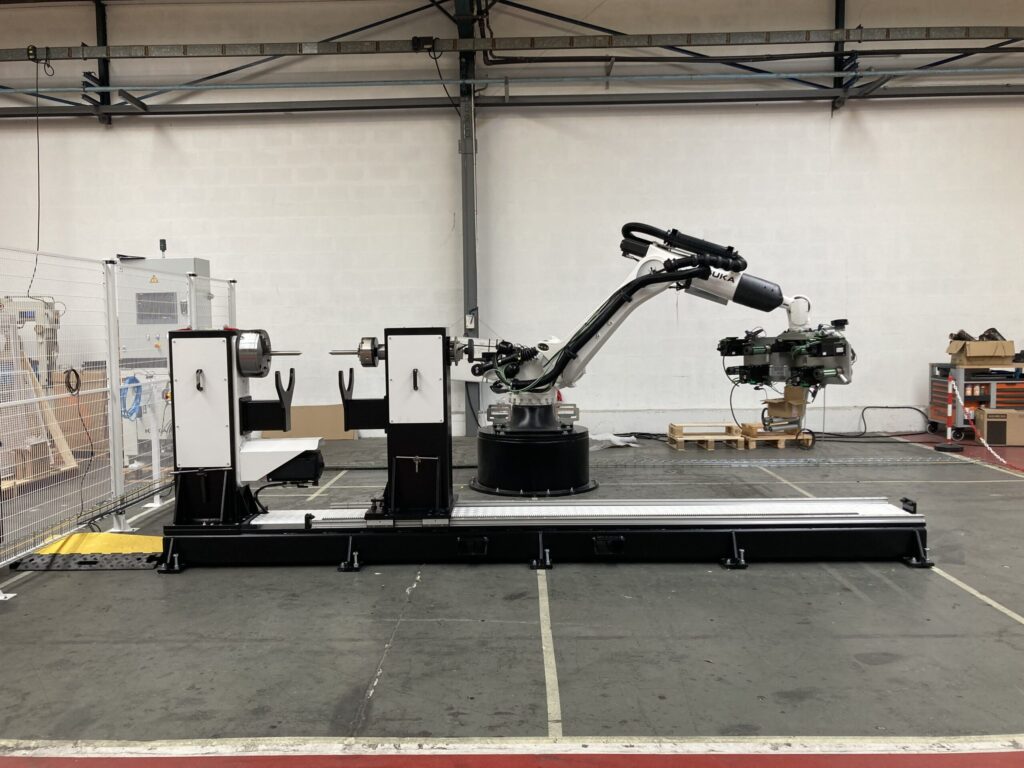
Use: Lightweight composite structure manufacturing for space launch applications, including filament wound fuel tanks and high temperature oxide-oxide ceramic composites for hypersonic vehicles.
The filament winding facility is Australia’s most advanced 8-axis filament winder to support pressure tank research and ultra-high temperature oxide processing. The iLAuNCH Trailblazer will provide upgrades to the filament winder to resin impregnate dry fibre tows.
The ability to resin impregnate allows adjustment and refinement of resin quantity, avoids the aging process and permits usage of room temperature resins allowing fabrication of large structures without a thermoset oven requirement.
Dual layer robotic braiding facility
- Location: Toowoomba
- Partners: Centre for Future Materials (CFM) at UniSQ

Use: Capable of manufacturing high performance complex tubular composite structures for defence and space applications.
The dual-ring 84/60 carrier braider enables the production of advanced composite structures.
The machine is able to braid carbon, glass, Kevlar, thermoplastic and co-mingled yarns for the generation of complex lightweight dry-fibre preforms on industrial scales.
Industry 4.0 Testlab
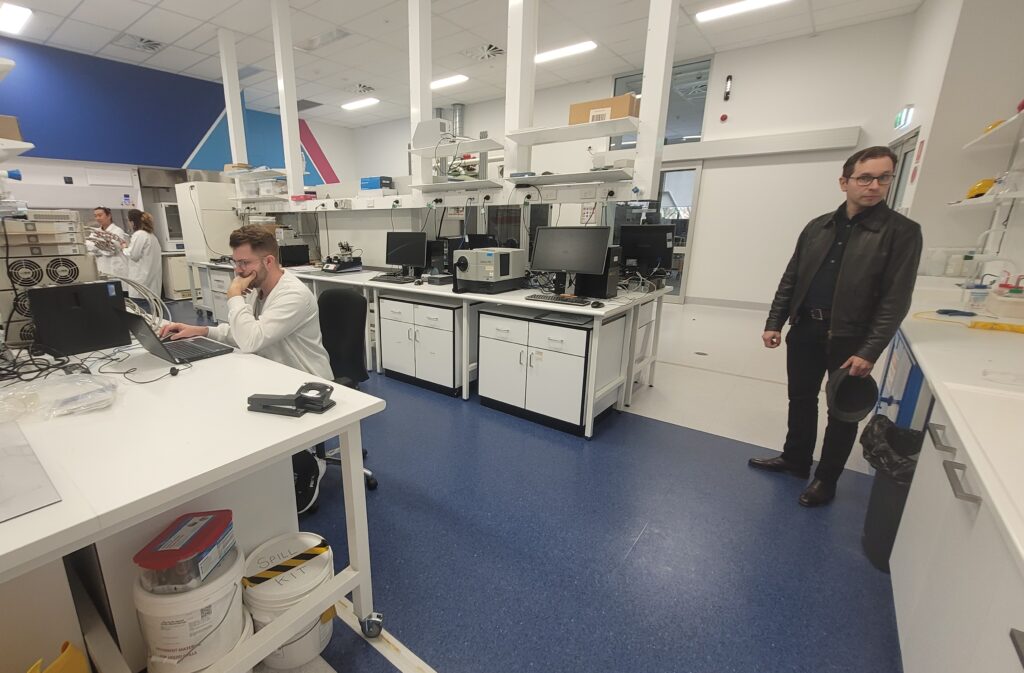
Use: Capable of manufacturing resin, filament and metal for aerospace applications.
The UniSA Testlab comprises of 3D printing, post printing analysis and treatment facilities, and 3D scanning equipment.
The materials that can be 3D printed include thermo-plastics, photo-polymers, metals and composite materials such as carbon fibre embedded in nylon-12.
Hypersonics & Flight Diagnostics
Hypersonic Wind Tunnel
- Location: Toowoomba
- Partners: The Institute for Advanced Engineering and Space Sciences’ Hypersonics and Rocketry Research at UniSQ
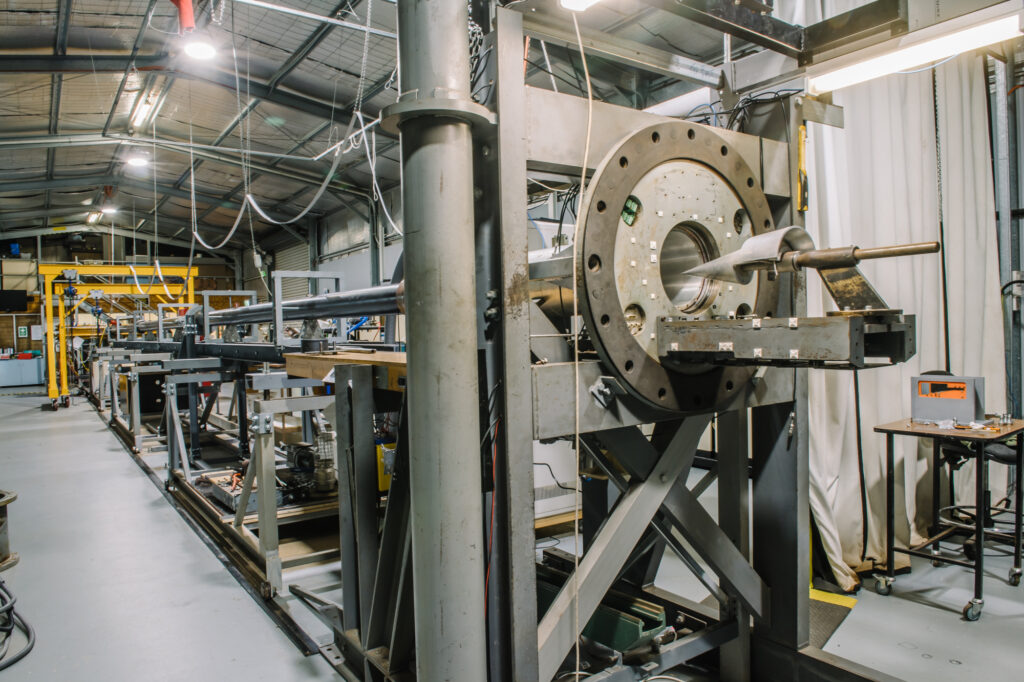
Use: Design and test hypersonic vehicles under dynamic conditions.
The longest duration hypersonic wind tunnel in Australia, enabling hypersonic aerodynamics free-flight, proximal body separation, heat transfer, control, and fluid-structure interaction experiments that cannot be performed elsewhere.
Experimental work in this facility is supported through a wide range of state-of-the-art high speed flow visualisation techniques and instrumentation methods.
Materials and Processing
Spark laser sintering furnace
Location: Toowoomba
Partners: University of Southern Queensland and entX
Use: For fusing high temperature high entropy alloys and thermoelectric devices.
Blasting cabinet and blasting rig
Partners: BlastOne and UniSQ
Use: Enhance maintenance and repair of aerospace structures and space vehicle launch infrastructure that need protection against corrosion, particularly those that exist in salty Australian seaside environments.
Rocket Launch
Mobile Mission Operations Centre
- Location: Brisbane and remote
- Partners: CSIRO


Use: Support space operations activities around Australia, and student outreach.
The Mobile Mission Operation Centre (MMOC) has been designed inside a B-Double trailer that can be rapidly moved around the country.
CSIRO is partnering with iLAuNCH to build a mobile facility that provides mission operations support that can be rapidly deployed and removed, reducing the need for supporting infrastructure and minimising impact.
When not used in support of launch operations, the facility can be utilised as a mobile, high-tech classroom to reach multiple audiences, anywhere across Australia, supporting:
- Teacher professional development
- Student training and outreach
- Research operations support
- Stakeholder and community engagement
Satellites, Communications and Sensors
National Space Test Facility
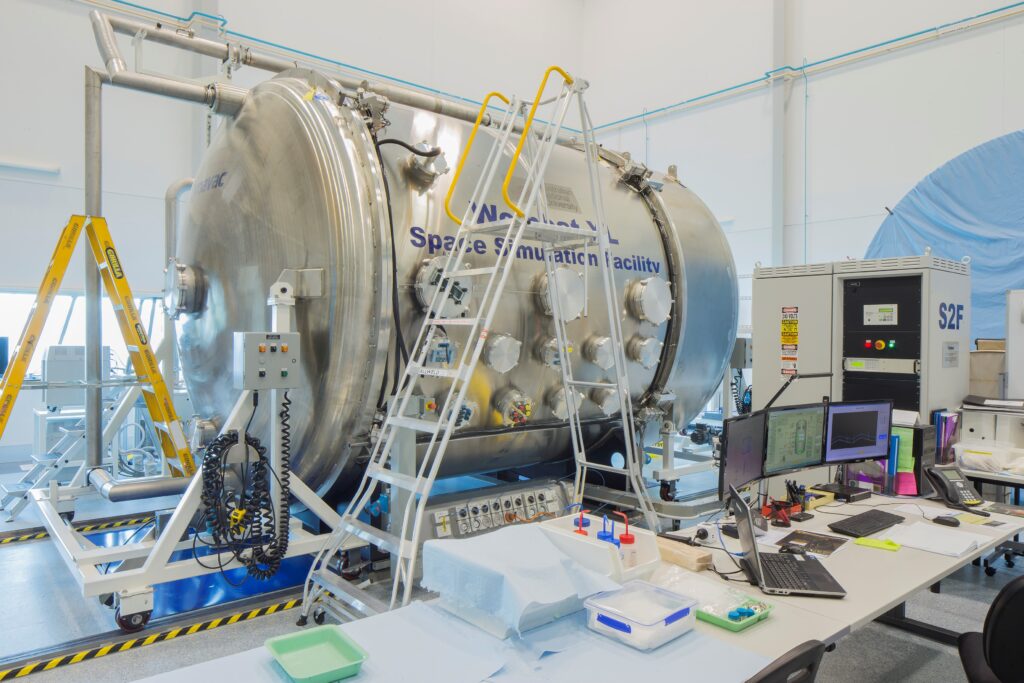
Use: Unique space environmental testing capabilities, such as thermal vacuum, vibration, pyroshock, electromagnetic interference/compatibility, LEO atomic oxygen interaction, and the use of a large cleanroom for assembly and integration activities.
Successfully space qualified Space Machines Optimus satellite for launch in March 2024.
Industry Contact information
| Facility | Contact | |
|---|---|---|
| Australian National University, The National Space Test Facility | Director: Eduardo Trifoni | eduardo.trifoni@anu.edu.au |
| CSIRO Lab 22 | Senior Research Scientist: Dr. Cherry (Ling) Chen | Ling.chen@csiro.au |
| CSIRO Mobile Mission Operations Centre | Principal Research Engineer: Craig James | craig.a.james@csiro.au |
| University of Southern Queensland Centre for Future Materials | Director: Professor Xuesen Zeng | CFM@unisq.edu.au |
| University of South Australia’s Industry 4.0 Testlab | iLAunCH Lead: Professor Colin Hall | Testlab@unisa.edu.au |
| University of Southern Queensland Centre for Hypersonics and Rocketry | Director: Professor David Buttsworth | david.buttsworth@unisq.edu.au |