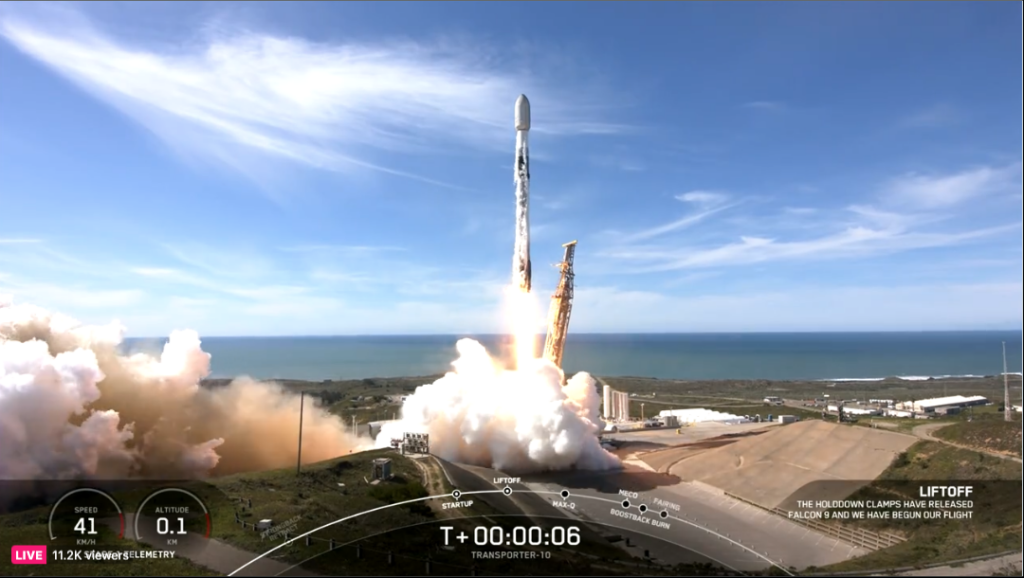
Space Machines launch the biggest Australian satellite in history
Insights on Space Machines qualifying the biggest Australian satellite, Optimus, from iLAuNCH CTO, Dr Joni Sytsma
Today marks a historic moment as we witness the launch of the largest satellite ever manufactured in Australia, a truly remarkable achievement. This spacecraft is largely sourced from Australian industry components. We have components on it [the thermal blankets], that were sewn by a tailor in Sydney. The inertial navigation system is supplied by Advanced Navigation, another Sydney company, and they’ve done extremely well. They were a startup, and now they’re absolutely scaling it up.
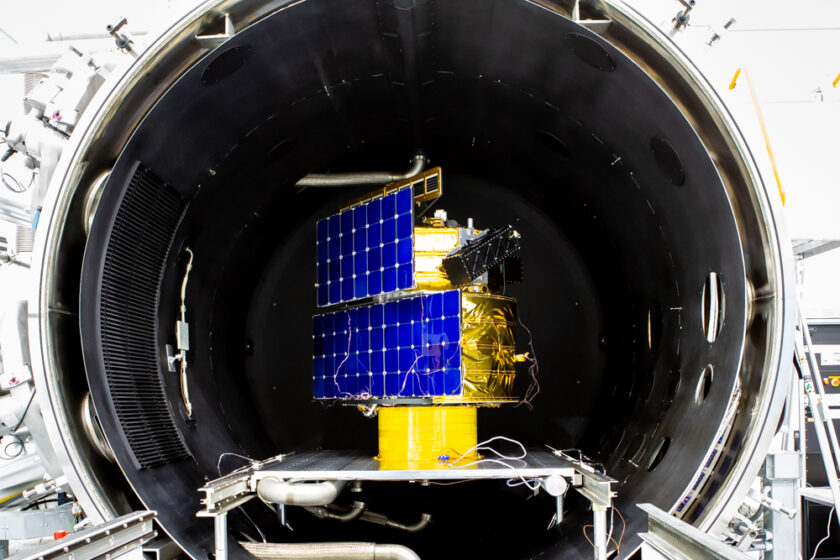
It’s been a couple of years in the making so it’s a substantial buildup from nothing to what is a very large satellite for Australia. The Optimus Platform, is designed to provide servicing and protection for vital in-space infrastructure. The iLAuNCH Trailblazer and The Australian National University (ANU) enabled by the Institute for Space (InSpace) has been a critical part of this space heritage, qualifying the Optimus transport and logistics platform for space.
This class of satellite is what I call an ‘Australian class satellite’ because it’s the biggest satellite that we can qualify in this country. And if we can qualify it here at the National Space Test Facility, then it drastically reduces costs. If you had to ship it to the US you would have to add $3-5M to the cost. So, we’re now going to see a lot of these satellites that are this size between 250 kilos and 350 kilos because those are the biggest things that we are able to fit in Wombat XL.
The importance of it being Australian will mean we see more of this in the future. You’re absolutely going to see more of these sized satellites, not cube satellites, and I think the biggest thing to think about is that prior to today, everything that Australia has launched into space by ourselves has been a cube satellite. These are less than 50 kilograms, smallish in size and about the shape of a cube. This is a level up in technical complexity and scale. Cube satellites are heavily limited in size, weight, and power, and that really limits their usefulness technically and from a research perspective. However, being able to field these large satellites brings a step change in capability for the platform itself, which in turn enters us into the new space race in a much bigger way than we ever have before, so it’s a big deal.
Main image Credit: Cristy Roberts, ANU